


Israeli voters delivered a sharp rebuke on Tuesday to Prime Minister Benjamin Netanyahu with exit polls indicating voters gave his opponents a solid majority in the next parliament.
Whether those disparate parties can form a government is uncertain and will likely take weeks of haggling.
The opposition may still find it difficult to form a government to replace him. The easiest path would involve his main rival, former military chief Gadi Eisenkot, partnering with Arab-led parties, but that could prove politically difficult and potentially alienate other opposition factions.
The exit polls released by major Israeli TV stations suggested that Mr Netanyahu’s bloc won 50 seats, the opposition won 52-53 and Arab parties won 17-18.
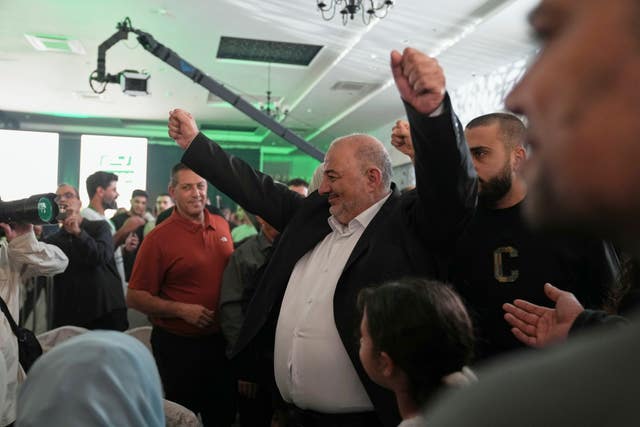
That would set the stage for weeks of political jockeying before a prime minister is declared – or another round of elections is called.
Mr Eisenkot said the exit polls show a “lack of confidence” in the current prime minister. Arab voters celebrated the exit polls while supporters of far-right parties aligned with Mr Netanyahu expressed disappointment.
Like all surveys, exit polls are subject to potential error. Preliminary results are expected in the coming hours. Final results are expected in the coming days and may vary from the exit polls.
An inconclusive result would leave Israel in political limbo after the country’s first national election since the October 7 2023 attack by Hamas.

The race is widely seen as a referendum on Mr Netanyahu whose 17-year rule – with a year’s break – had left Israelis bitterly divided on a host of issues even before the deadliest attack in its history.
The resulting wars in Gaza, Lebanon and Iran, along with settler violence in the occupied West Bank, have stoked worldwide outrage, straining ties with Israel’s closest allies and fuelling a rise in antisemitism.
Among Israelis, the election is widely seen as a struggle over the character of the state, pitting Mr Netanyahu and his ultranationalist and religious allies against those seeking to preserve its liberal and secular foundations.
The opposition may soon have to grapple with the social divisions, between right and left, and between Jews and Arabs, that have widened during Mr Netanyahu’s long and polarising rule.
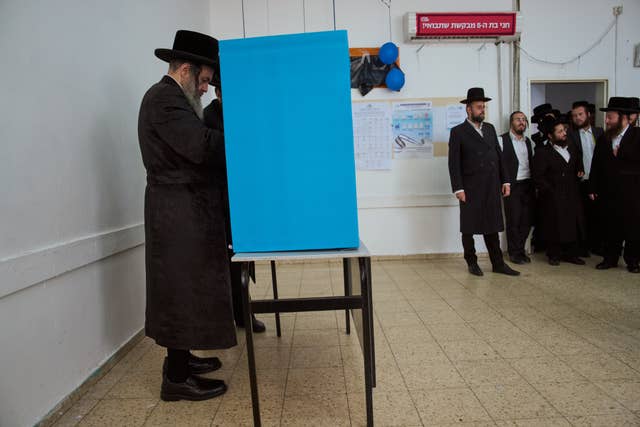
More than 74% of eligible voters had cast ballots by 8pm, the highest turnout at that time in decades, and eight percentage points higher than in the last elections in 2022, according to the Central Elections Committee.
More than 7.0 million people are eligible to vote, and tens of thousands have reportedly arrived from overseas.
Israel’s president will be tasked with asking the party leader with the best prospect of forming a government, usually one with the most seats, to cobble together a coalition. If Mr Netanyahu’s right-wing Likud emerges as the largest party, he could claim that right.
There will, meanwhile, be heavy pressure on Mr Eisenkot to reach a deal with the Arab parties, while Mr Netanyahu and his allies are likely to cast any such alliance as illegitimate and even treasonous.
If no one can cobble together a majority coalition, new elections could be held early next year. Israel held five elections between April 2019 and November 2022 because of a similar stalemate.
No single party has ever won an outright majority in the country’s 120-seat parliament, forcing political leaders to forge coalitions. Minority governments are also possible, but they must rely on support or co-operation from parties outside the government to pass legislation.


Share